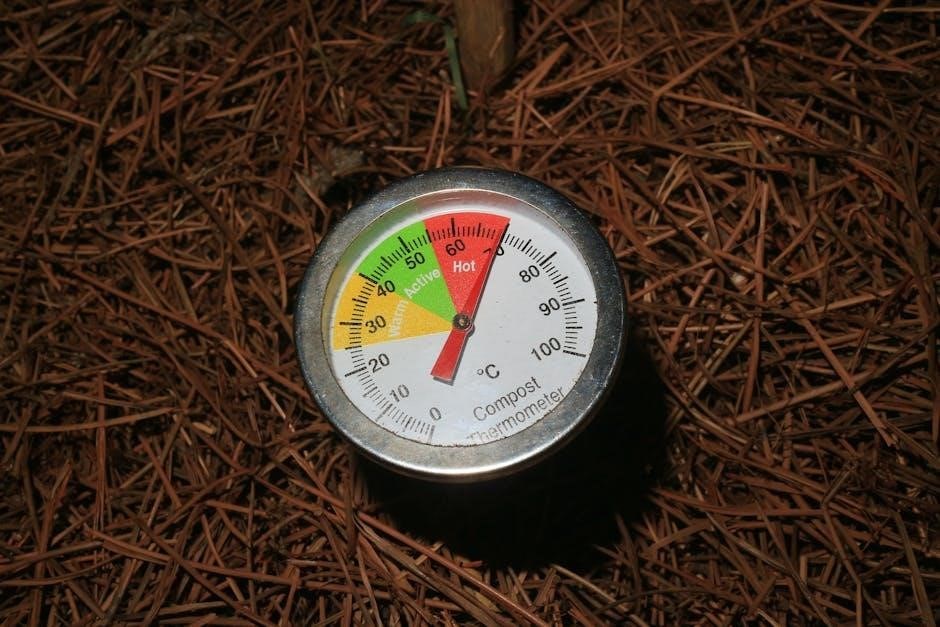
Celsius to Fahrenheit Chart PDF: A Comprehensive Guide
A Celsius to Fahrenheit chart PDF offers a quick‚ accessible temperature conversion tool. These charts simplify calculations‚ especially for cooking‚ weather‚ or scientific applications‚ providing readily available data.

Temperature conversion is a fundamental process across numerous disciplines‚ from everyday cooking to complex scientific research. Understanding how to translate between different scales‚ particularly Celsius and Fahrenheit‚ is crucial for accurate measurements and consistent results. The need for conversion arises because different regions and fields historically adopted different temperature scales. Celsius‚ part of the metric system‚ is widely used globally‚ while Fahrenheit remains common in the United States.
A Celsius to Fahrenheit chart PDF serves as a practical tool for quickly referencing equivalent temperatures without performing manual calculations. These charts are especially useful when immediate conversions are needed‚ or when working in environments where calculators are unavailable. The core principle behind these conversions lies in a mathematical formula‚ but a chart provides a visual and easily digestible representation of the relationship between the two scales.
Furthermore‚ the convenience of a PDF format allows for easy storage‚ printing‚ and portability‚ making it an ideal resource for various applications. Whether you’re adjusting oven temperatures for a recipe‚ monitoring weather forecasts‚ or conducting laboratory experiments‚ a readily available chart simplifies the process and minimizes errors.
Understanding the Celsius Scale
The Celsius scale‚ originally known as centigrade‚ is a temperature scale based on 0°C for the freezing point of water and 100°C for the boiling point of water at standard atmospheric pressure. This makes it a convenient and intuitive system‚ directly relating to common physical phenomena. Developed by Swedish astronomer Anders Celsius in 1742‚ it’s now the standard scale used in most of the world for scientific and everyday purposes.
Unlike Fahrenheit‚ the Celsius scale is a decimal system‚ simplifying calculations and conversions. Each degree represents an equal increment of temperature change. This inherent simplicity is a key reason for its widespread adoption in scientific contexts. When utilizing a Celsius to Fahrenheit chart PDF‚ understanding that 0°C represents freezing and 100°C boiling provides a valuable frame of reference.
The scale’s linear nature also makes it easy to visualize temperature differences. A 10°C increase always represents the same amount of thermal energy change. This clarity is beneficial when interpreting data presented on a chart‚ allowing for quick assessments of temperature variations.
Understanding the Fahrenheit Scale
The Fahrenheit scale is a temperature scale named after the German physicist Daniel Gabriel Fahrenheit‚ developed in the early 18th century. It defines the freezing point of water at 32°F and the boiling point at 212°F‚ resulting in a wider range of degree increments compared to Celsius. Historically‚ this scale was widely used in English-speaking countries‚ particularly the United States‚ and remains prevalent in some everyday applications.
While less intuitive than Celsius for scientific work‚ the Fahrenheit scale has its own practical advantages. The scale’s origin was based on a mixture of ice‚ water‚ and ammonium chloride brine‚ aiming for a more accurate representation of human body temperature (originally set at 96°F‚ later refined). When referencing a Celsius to Fahrenheit chart PDF‚ recognizing these historical benchmarks can aid comprehension.
Understanding that Fahrenheit uses smaller degree increments means a larger numerical change is needed to represent the same temperature difference as in Celsius. This is crucial when interpreting values on conversion charts and applying them to real-world scenarios like cooking or weather monitoring.
The Conversion Formula: Celsius to Fahrenheit
The cornerstone of any Celsius to Fahrenheit chart PDF is the conversion formula: F = (C × 9/5) + 32. This equation allows for precise temperature translation between the two scales. It’s essential to understand the formula’s components – multiplying the Celsius temperature by 9/5 adjusts for the differing size of each degree‚ and adding 32 accounts for the offset in the scales’ zero points.
Applying this formula manually can be time-consuming‚ which is where a pre-calculated chart becomes invaluable. A well-designed Celsius to Fahrenheit chart PDF essentially performs this calculation for a range of Celsius values‚ presenting the corresponding Fahrenheit temperatures in an easily readable format. This eliminates the need for repeated calculations.
However‚ knowing the formula provides a deeper understanding of the conversion process. It allows for quick mental estimations and verification of values obtained from a chart. Furthermore‚ it’s crucial for creating customized charts or adapting conversions for specific applications beyond those covered in a standard Celsius to Fahrenheit chart PDF.

Why Use a Celsius to Fahrenheit Chart?
Employing a Celsius to Fahrenheit chart PDF streamlines temperature conversions‚ offering significant advantages over manual calculations. These charts provide instant readability‚ eliminating the need to repeatedly apply the conversion formula – F = (C × 9/5) + 32. This is particularly useful in scenarios demanding quick reference‚ such as cooking‚ weather monitoring‚ or scientific experiments.
A Celsius to Fahrenheit chart PDF is exceptionally practical for recipes originating from countries using different temperature scales. Instead of performing calculations each time‚ cooks can directly correlate Celsius oven temperatures with their Fahrenheit equivalents. Similarly‚ travelers encountering Fahrenheit readings can swiftly understand the corresponding Celsius value.
Beyond convenience‚ charts minimize the risk of calculation errors. A pre-calculated‚ accurate Celsius to Fahrenheit chart PDF ensures reliable conversions. They are also portable and accessible offline‚ unlike online converters that require an internet connection. Ultimately‚ these charts offer a simple‚ efficient‚ and dependable solution for temperature conversions.
Benefits of a PDF Chart Format
Choosing a Celsius to Fahrenheit chart PDF offers distinct advantages over other formats. PDFs ensure consistent formatting across various devices and operating systems‚ guaranteeing the chart appears as intended‚ regardless of the user’s setup; This universal compatibility is crucial for widespread accessibility and reliable reference.
Furthermore‚ PDFs are easily downloadable and storable‚ allowing users to keep a readily available conversion tool without needing an internet connection. This offline access is invaluable in situations where connectivity is limited or unavailable. A Celsius to Fahrenheit chart PDF can be saved on computers‚ tablets‚ or smartphones for instant access.
PDFs also facilitate easy printing. Users can create a physical copy of the chart for convenient placement in kitchens‚ laboratories‚ or workshops. The format’s preservation of visual elements ensures clarity and readability even when printed. Finally‚ PDFs are generally secure and resistant to unauthorized modifications‚ maintaining the chart’s accuracy and integrity.
Creating a Basic Celsius to Fahrenheit Chart
Constructing a fundamental Celsius to Fahrenheit chart PDF is straightforward‚ requiring only the conversion formula: F = (C × 9/5) + 32. Begin by establishing a range of Celsius temperatures – for instance‚ from 0°C to 100°C. Then‚ systematically apply the formula to each Celsius value to calculate the corresponding Fahrenheit temperature.
Organize the results into a table with two columns: one for Celsius and one for Fahrenheit. Ensure clear headings for each column. For enhanced readability‚ consider including increments of 10°C‚ or even 5°C‚ to provide a more granular conversion scale. This allows for quicker lookups of intermediate temperatures.
Once the table is complete‚ it can be easily exported as a PDF using various software applications‚ such as Microsoft Word‚ Google Docs‚ or dedicated PDF creation tools. Prior to saving‚ review the chart for accuracy and formatting consistency. A well-structured Celsius to Fahrenheit chart PDF should be easy to understand and use.
Celsius to Fahrenheit Chart: 0°C to 100°C (in 10°C Increments)
Here’s a Celsius to Fahrenheit chart PDF displaying conversions from 0°C to 100°C‚ incrementing by 10°C. This provides a readily accessible reference for common temperature ranges. Utilizing the formula F = (C × 9/5) + 32‚ we’ve calculated corresponding Fahrenheit values for quick temperature assessment.
Celsius (°C) | Fahrenheit (°F)
0°C | 32°F
10°C | 50°F
20°C | 68°F
30°C | 86°F
40°C | 104°F
50°C | 122°F
60°C | 140°F
70°C | 158°F
80°C | 176°F
90°C | 194°F
100°C | 212°F
This chart‚ easily saved as a Celsius to Fahrenheit chart PDF‚ is invaluable for various applications‚ including cooking‚ weather monitoring‚ and basic scientific experiments. The 10°C increments offer a balance between detail and simplicity‚ making it user-friendly for quick temperature estimations. Remember to consult a more detailed chart or converter for precise values between these increments.
Celsius to Fahrenheit Chart: Detailed Range (e.g.‚ -40°C to 120°C)
Expanding beyond common temperatures‚ this Celsius to Fahrenheit chart PDF covers a detailed range from -40°C to 120°C. This broader spectrum is crucial for applications requiring precise temperature monitoring across diverse conditions‚ like scientific research or specialized industrial processes. The conversion formula‚ F = (C × 9/5) + 32‚ remains consistent throughout this extended range.
Celsius (°C) | Fahrenheit (°F)
-40°C | -40°F
-30°C | -22°F
-20°C | -4°F
-10°C | 14°F
0°C | 32°F
10°C | 50°F
…(intermediate values)…
100°C | 212°F
110°C | 230°F
120°C | 248°F
Saving this as a Celsius to Fahrenheit chart PDF provides a portable and readily available resource. Note the unique point where -40°C equals -40°F. This detailed chart is particularly useful when dealing with extreme temperatures‚ offering a comprehensive reference beyond everyday applications. For highly accurate conversions‚ especially outside these increments‚ utilizing an online converter alongside the chart is recommended.

Using the Chart for Cooking Temperatures
A Celsius to Fahrenheit chart PDF is an invaluable tool in the kitchen‚ bridging the gap between recipes originating from different regions. Many older recipes‚ particularly those from the United States‚ utilize Fahrenheit‚ while many modern international recipes employ Celsius. This chart eliminates guesswork and ensures accurate oven temperatures for optimal cooking results.
Common cooking temperatures and their conversions include:
150°C (302°F) – Low oven for slow roasting.
180°C (356°F) – Standard baking temperature.
200°C (392°F) – For roasting meats and vegetables.
220°C (428°F) – High heat for searing and grilling.
Having a readily accessible Celsius to Fahrenheit chart PDF prevents undercooked or overcooked dishes. Remember that oven temperatures can vary‚ so using an oven thermometer alongside the chart is advisable. Correct temperature is a “small detail that can have a big impact on how it looks and tastes‚” as highlighted by cooking experts. Download and print a copy for convenient use while following recipes‚ ensuring culinary success every time.
Celsius to Fahrenheit Chart for Weather Applications
Understanding weather reports often requires converting between Celsius and Fahrenheit‚ depending on the source. A readily available Celsius to Fahrenheit chart PDF simplifies this process‚ allowing for quick comprehension of temperature readings. Many global weather services report in Celsius‚ while the United States predominantly uses Fahrenheit.
Key weather benchmarks and their conversions include:
0°C (32°F) – Freezing point of water.
10°C (50°F) – Cool temperature‚ often requiring a light jacket.
20°C (68°F) – Comfortable room temperature.
30°C (86°F) – Warm temperature‚ typical of summer days;
40°C (104°F) – Very hot temperature‚ potentially dangerous.
A printed Celsius to Fahrenheit chart PDF is particularly useful when monitoring outdoor temperatures or interpreting forecasts. Quick reference avoids mental calculations and ensures accurate understanding of weather conditions. This is crucial for planning outdoor activities‚ preparing for extreme weather events‚ and staying informed about potential hazards. Having this chart handy provides immediate access to vital temperature information.
Celsius to Fahrenheit Chart for Scientific Use
In scientific disciplines‚ precise temperature measurement and conversion are paramount. A Celsius to Fahrenheit chart PDF serves as a convenient reference tool‚ particularly when working with data from diverse sources utilizing different temperature scales. While many modern scientific instruments display readings in Celsius‚ historical data or collaborations with researchers using Fahrenheit necessitate quick and accurate conversions.
Key scientific applications include chemistry‚ physics‚ and biology‚ where temperature significantly impacts experimental results. For example‚ understanding phase transitions (melting‚ boiling) requires knowing temperatures in both scales. A readily accessible chart minimizes calculation errors and streamlines data analysis.
A Celsius to Fahrenheit chart PDF is especially useful in laboratory settings where immediate conversions are needed during experiments. It’s a practical alternative to relying solely on digital converters‚ offering a quick visual aid. Maintaining accuracy is crucial‚ and a well-formatted chart ensures reliable temperature interpretations‚ contributing to the validity of scientific findings and reproducible results.
Converting Specific Temperatures: Examples
Let’s illustrate temperature conversions using a Celsius to Fahrenheit chart PDF and the formula C = (F ౼ 32) × 5/9. Consider body temperature: 37°C is equivalent to (37 * 9/5) + 32 = 98.6°F. This demonstrates the chart’s utility in healthcare and understanding physiological norms.
Another example: the freezing point of water‚ 0°C‚ translates to 32°F. Conversely‚ a comfortable room temperature of 20°C is (20 * 9/5) + 32 = 68°F. These common conversions highlight the chart’s everyday relevance.
For more extreme temperatures‚ a Celsius to Fahrenheit chart PDF proves invaluable. -40°C is equal to -40°F – a unique point where both scales converge. Boiling point of water‚ 100°C‚ is 212°F. Utilizing a chart‚ or the formula‚ ensures accurate conversions for diverse applications‚ from weather monitoring to industrial processes‚ avoiding potential errors in critical situations.
Downloading and Printing a Celsius to Fahrenheit Chart PDF
Accessing a Celsius to Fahrenheit chart PDF is straightforward. Numerous websites offer free‚ downloadable charts in PDF format. A quick online search for “Celsius to Fahrenheit chart PDF” yields a variety of options‚ catering to different levels of detail and design preferences.
Once downloaded‚ opening the PDF requires a PDF reader like Adobe Acrobat Reader‚ readily available for free. Printing the chart is equally simple; select the “Print” option within the PDF reader and choose your desired printer settings. Consider printing on cardstock for increased durability.
Having a physical copy of a Celsius to Fahrenheit chart PDF is incredibly convenient‚ especially in situations where digital access is limited. It’s perfect for kitchens‚ workshops‚ or classrooms. Ensure the printed chart is clear and legible for accurate temperature conversions. Regularly updating your chart with the latest version ensures you have the most current information available.
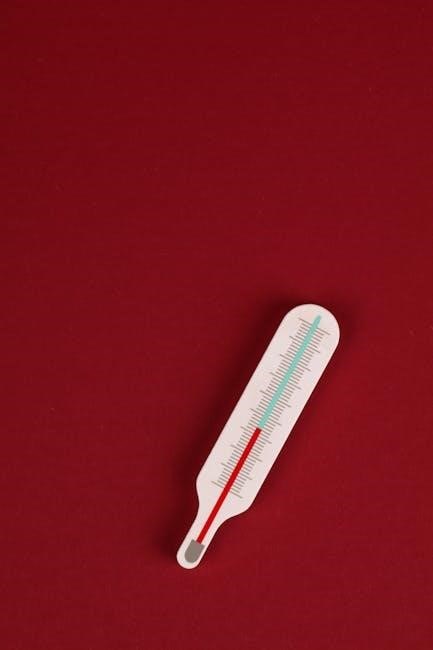
Online Celsius to Fahrenheit Converters vs. Charts
While online Celsius to Fahrenheit converters offer instant‚ precise conversions for specific temperatures‚ a Celsius to Fahrenheit chart PDF provides a broader overview and quick reference. Converters excel at single-point calculations‚ ideal when you need a single value transformed. However‚ they lack the visual context of a chart.
Charts‚ particularly in PDF format‚ allow you to quickly scan a range of temperatures and their equivalents. This is beneficial when dealing with processes involving multiple temperature points‚ like cooking or scientific experiments. A PDF chart is also accessible offline‚ unlike converters requiring an internet connection.
The choice depends on your needs. For frequent‚ isolated conversions‚ an online tool is efficient. For a comprehensive understanding and readily available reference‚ especially in environments without consistent internet access‚ a downloadable Celsius to Fahrenheit chart PDF remains a valuable resource. Both tools complement each other effectively.

Customizing Your Celsius to Fahrenheit Chart
A pre-made Celsius to Fahrenheit chart PDF is useful‚ but tailoring it to your specific needs enhances its practicality. Customization allows you to focus on the temperature ranges most relevant to your applications‚ whether it’s baking‚ weather monitoring‚ or scientific research. You can adjust the step sizes – opting for 1°C/2°F increments for precision‚ or larger steps like 5°C/10°F for a broader overview.
Consider adding annotations to your customized Celsius to Fahrenheit chart PDF. For cooking‚ note the temperatures for different cooking methods (rare‚ medium‚ well-done). For scientific use‚ highlight critical thresholds. PDF editing software allows you to easily add text‚ symbols‚ and even color-coding.

Furthermore‚ you can create multiple charts focused on specific ranges. A chart covering -40°C to 20°C is ideal for winter weather‚ while another from 20°C to 120°C suits cooking applications. A personalized Celsius to Fahrenheit chart PDF becomes a powerful‚ targeted tool.
Creating Charts with Step Sizes (e.g.‚ 5°F‚ 2°C)

When constructing a Celsius to Fahrenheit chart PDF‚ selecting appropriate step sizes is crucial for usability. A standard chart might use 10°C (18°F) increments‚ but finer or coarser steps can be more practical depending on the application. For precise cooking‚ a 2°C (3.6°F) step size offers greater control‚ allowing for nuanced temperature adjustments.

Conversely‚ for general weather observations‚ a 5°C (9°F) step size might suffice‚ providing a broader overview without excessive detail. Creating a Celsius to Fahrenheit chart PDF with multiple step sizes – perhaps a primary chart with 10°C increments and inset charts with smaller steps – offers versatility.
Remember the conversion formula: C = (F ⎯ 32) × 5/9. Applying this consistently across your chosen step sizes ensures accuracy. Software tools or spreadsheets can automate this process‚ generating a precise Celsius to Fahrenheit chart PDF quickly and efficiently. Consider the end-user when choosing step sizes; clarity and ease of use are paramount.
Resources for Celsius to Fahrenheit Conversion
Numerous online resources facilitate Celsius to Fahrenheit chart PDF creation and temperature conversion. Dedicated websites offer interactive converters‚ allowing users to input values and instantly see the equivalent temperature in both scales. Many of these sites also provide downloadable Celsius to Fahrenheit chart PDF templates‚ pre-populated with common temperature ranges.
Spreadsheet software like Microsoft Excel or Google Sheets can be utilized to build custom charts. Utilizing the formula C = (F ౼ 32) × 5/9‚ you can easily generate a comprehensive Celsius to Fahrenheit chart PDF tailored to specific needs. Educational websites often feature conversion tables and explanations of the underlying principles.
Furthermore‚ mobile applications are available for quick on-the-go conversions. When seeking a Celsius to Fahrenheit chart PDF‚ ensure the source is reputable to guarantee accuracy. Cross-referencing with multiple resources is always recommended for verification. Remember to consider the context – cooking‚ science‚ or weather – when selecting a resource.
Troubleshooting Common Conversion Errors
When utilizing a Celsius to Fahrenheit chart PDF or performing conversions manually‚ several errors can occur. A frequent mistake involves misapplying the conversion formula: C = (F ⎯ 32) × 5/9. Ensure correct order of operations‚ particularly with parentheses and multiplication/division. Incorrectly identifying the scale – confusing Celsius for Fahrenheit – is another common issue.
When creating a Celsius to Fahrenheit chart PDF‚ double-check the step size and range to avoid inaccuracies. Rounding errors can accumulate‚ especially in extensive charts; maintaining sufficient decimal places during calculations minimizes this. Always verify results with a known conversion‚ like 0°C = 32°F or 100°C = 212°F.
If using an online converter‚ confirm its reliability and check for potential input errors. When printing a Celsius to Fahrenheit chart PDF‚ ensure the scaling is correct to maintain readability and accuracy. Remember that slight variations can occur due to rounding differences between tools.